Team from IITP RAS and MIPT has figured out how to bypass the “channel information volume curse” in future Wi-Fi networks.
Team of the Wireless Networks Lab at the Institute for Information Transmission Problems, Russian Academy of Sciences (IITP RAS) and the Laboratory of Intelligent Communication Systems at Moscow Institute of Physics and Technology – Egor Endovitsky, Vyacheslav Loginov, Mikhail Dekanoidze, Anton Tretyakov, and Evgeny Khorov – has found an elegant solution to a problem that currently limits the development of next-generation Wi-Fi networks. The issue concerns the critical reduction of overhead when handling a massive number of devices in multi-antenna transmission systems (MU-MIMO and D-MIMO). This work, supported by a grant from the Russian Science Foundation (RSF No 23-19-00756) and the “Priority 2030” program, underwent rigorous peer review and was accepted by the prestigious journal IEEE Wireless Communications Letters. This represents the highest level of recognition: WCL is among the top global journals in telecommunications, and papers are rejected even for minor issues.
What are the key results?
The main problem in current and future Wi-Fi networks (including Wi-Fi 8) using multi-antenna MU-MIMO technology is the “feedback bottleneck.” For a router to efficiently serve dozens of devices simultaneously, each client must continuously send it channel state information (CSI) – in other words, report how the signal is distorted on the path from the access point to a specific smartphone or laptop. The volume of this control data grows exponentially with bandwidth, the number of antennas, and devices, risking to “consume” the entire network capacity.
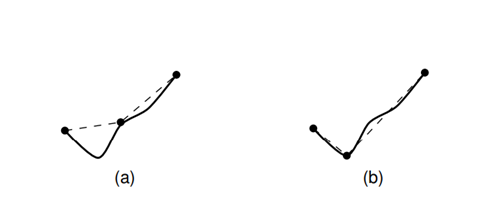
The traditional approach is to send full data only for a subset of frequencies (pilot subcarriers) and then mathematically reconstruct the rest. However, standard uniform methods fail in real urban or dense office environments, where signals “jump” between frequencies (resulting in frequency-selective fading).
The research team proposed an unconventional and elegant mathematical approach: they reformulated the selection of pilot points as a shortest-path problem and solved it using dynamic programming. This allows the pilot subcarriers to be selected adaptively, in real time, according to the actual interference environment.
The results speak for themselves: the proposed algorithm improves the average signal-to-interference-plus-noise ratio (SINR) by up to 6 dB at the same control data volume. For users, this means significantly more stable connections in crowded networks and real speed gains in areas where connectivity used to frequently drop.
A special reason for pride: a student’s first publication
Particular attention should be given to the contribution of third-year undergraduate Mikhail Dekanoidze from the basic department of Information Transmission and Data Analysis Problems. Much of the results Mikhail obtained in July 2025 during the summer school formed his debut scientific publication. And what a debut – straight into a Q1 journal, where many researchers struggle to be published for years.
“Mikhail did an enormous job: he analyzed the statistics of optimal interpolation nodes and showed that they can be compactly encoded. This is not just technical support; it is a full-fledged scientific result that not only strengthened the entire study but also demonstrated the practical applicability of our method in real chipsets. For a third-year student to conduct such analysis at the level of leading global standards is an exceptional achievement.”
notes Egor Endovitsky, a graduate student, research associate and Mikhail’s supervisor at the summer school, highly praising his work.
Looking ahead
“This work demonstrates the key advantage of our department – the integration of education and cutting-edge science. Already in the third year, our students do not just study theory from textbooks; they solve real-world problems at a global level, producing results recognized by leading international journals. We do not chase quantity in publications – we create an environment where talented students like Mikhail can thrive and contribute to science in a way that engineers around the world will see. For students, this is a unique opportunity to start a brilliant telecom career even before graduation. Join our department, and maybe tomorrow your name will be among the authors of the next breakthrough study.”
notes Evgeny Khorov, Head of the laboratory and Deputy Head of the Department.